Friday, December 31, 2021

What’s Entering the Public Domain in 2022: The Sun Also Rises, Winnie-the-Pooh, Buster Keaton Comedies & More

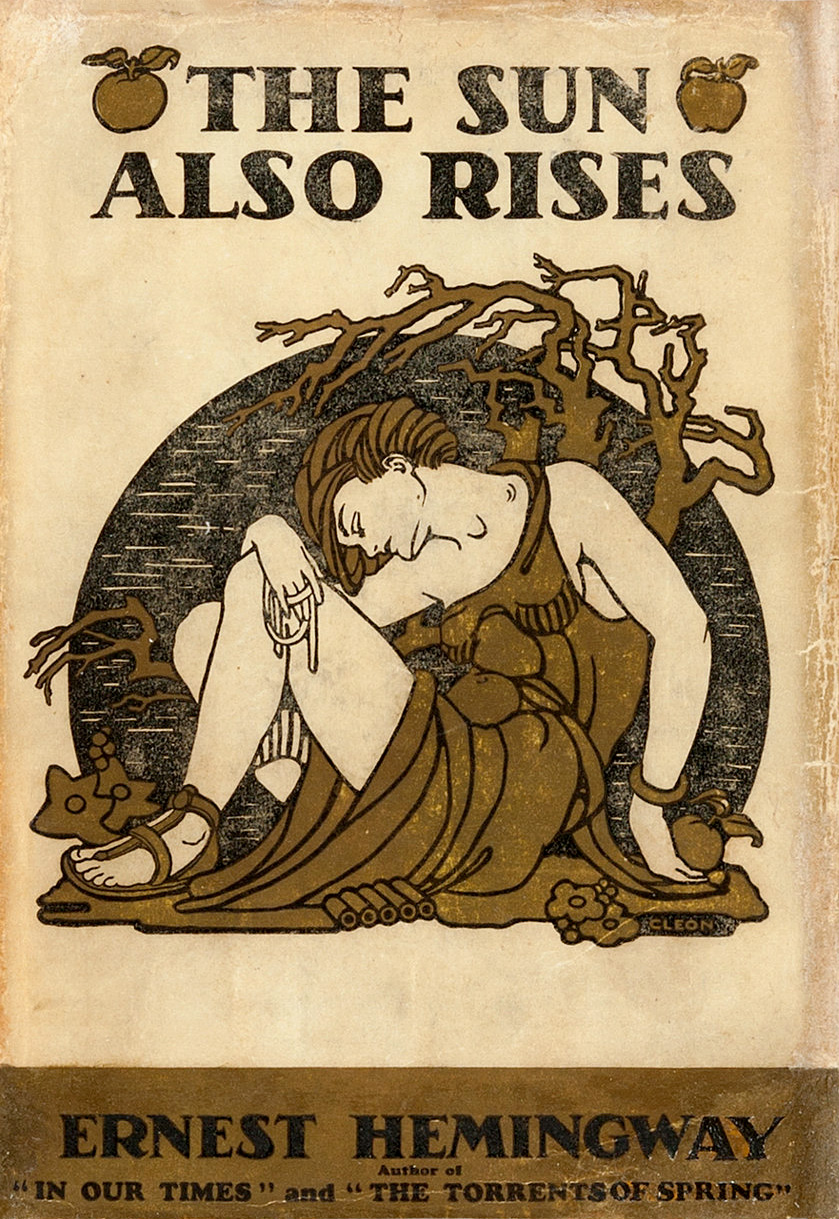
Ernest Hemingway “made the English language new, changed the rhythms of the way both his own and the next few generations would speak and write and think. The very grammar of a Hemingway sentence dictated, or was dictated by, a certain way of looking at the world, a way of looking but not joining, a way of moving through but not attaching, a kind of romantic individualism distinctly adapted to its time and source.” So writes the late Joan Didion, a writer hardly without influence herself, in a 1998 reflection on the author of such novels as A Farewell to Arms, For Whom the Bell Tolls, and  The Old Man and the Sea.
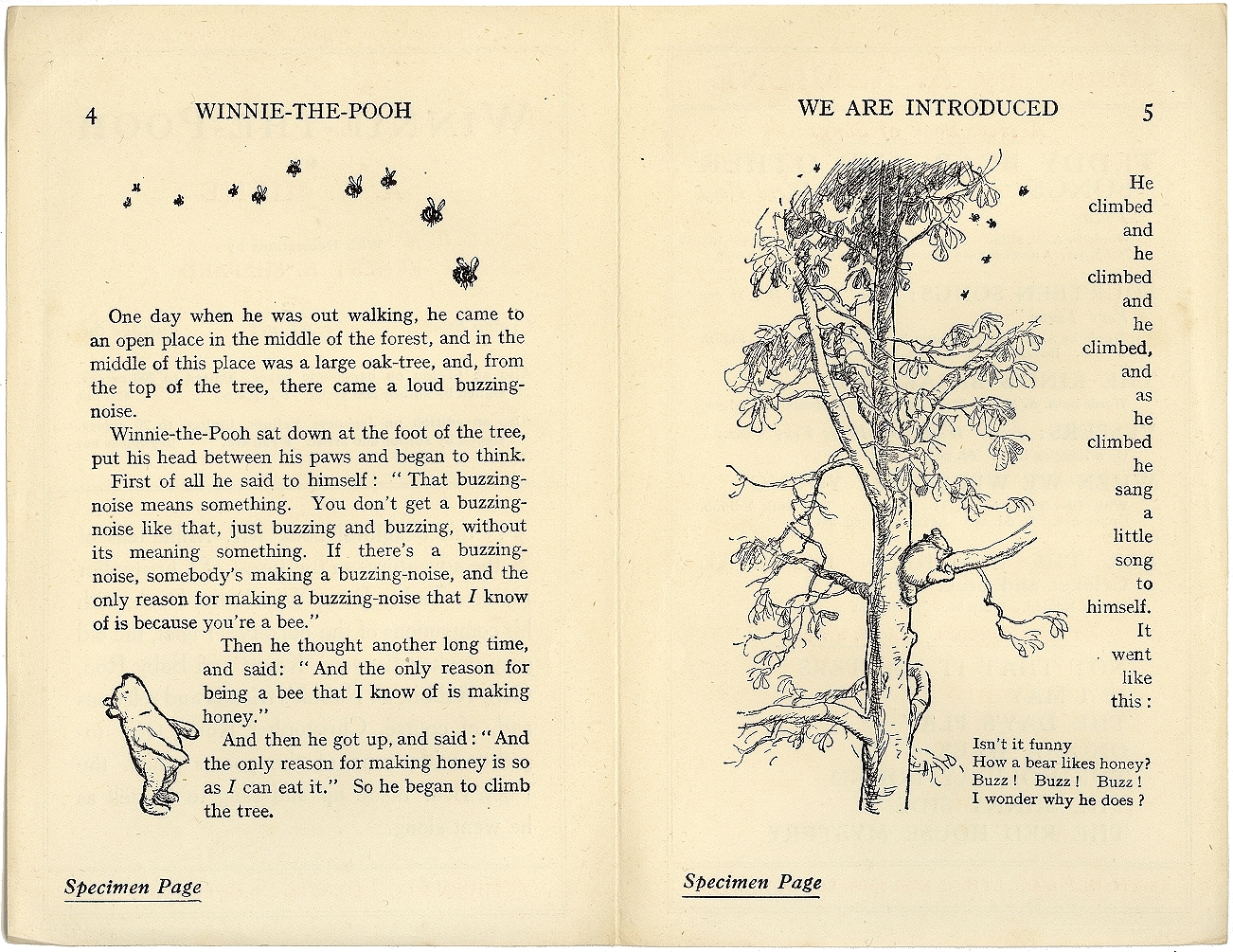
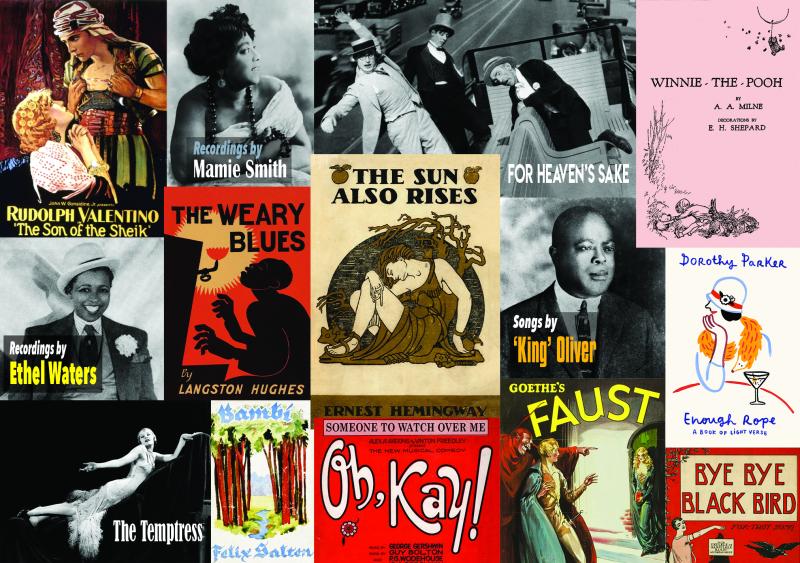
The literary phenomenon that was Hemingway began in earnest, as it were, with The Sun Also Rises. Having been published in 1926, his first full-length novel now stands on the brink of the public domain. So do a variety of other works that launched storied careers: William Faulkner’s first novel Soldiers’ Pay, for instance, or A.A. Milne’s Winnie-the-Pooh, which introduced the now-beloved titular bear to the reading public. Having celebrated his 90th anniversary back in 2016 with the addition of a new penguin character to the Hundred Acre Wood, Winnie-the-Pooh remains the core of what has developed into a formidable cultural industry.

The work of Hemingway, too, has inspired no small amount of commercial enterprise. (Didion writes of Thomasville Furniture Industries’ new “Ernest Hemingway Collection,” whose themes include “Kenya,” “Key West,” “Havana,” and “Ketchum.”) But now that work itself has begun to come legally available to all, free of charge: “anyone can rescue them from obscurity and make them available, where we can all discover, enjoy, and breathe new life into them.”

So writes Jennifer Jenkins, Director of Duke’s Center for the Study of the Public Domain, in her post on Public Domain Day 2022. In it she names a host of other 1926 books similarly set for liberation, including Langston Hughes’ The Weary Blues, T. E. Lawrence’s The Seven Pillars of Wisdom, Agatha Christie’s The Murder of Roger Ackroyd, and H. L. Mencken’s Notes on Democracy.

The deeper we get into the 21st century, the wider the variety of media that falls into the public domain. Jenkins highlights silent-film comedies like For Heaven’s Sake with Harold Lloyd and Battling Butler with Buster Keaton, as well — the mid-1920s having seen the dawn of the “talkie” — as sound pictures like Don Juan, the “first feature-length film to use the Vitaphone sound system.” Unlike in previous years, a large number of not just musical compositions but actual sound recordings will also come available for free reuse. These include records by jazz and blues singer Ethel Waters, operatic tenor Enrico Caruso, cellist Pablo Casals, and composer-pianist Sergei Rachmaninoff. And as for those waiting to reuse the work of Joan Didion, rest assured that The White Album will be yours on Public Domain Day 2091.

On a related note, the Public Domain Review has a nice post overviewing the sound recordings entering the public domain in ’22.
Related Content:

Ernest Hemingway’s Very First Published Stories, Free as an eBook

Hear the Classic Winnie-the-Pooh Read by Author A.A. Milne in 1929

Watch the Great Russian Composer Sergei Rachmaninoff in Home Movies

Safety Last, the 1923 Movie Featuring the Most Iconic Scene from Silent Film Era, Just Went Into the Public Domain

The Public Domain Project Makes 10,000 Film Clips, 64,000 Images & 100s of Audio Files Free to Use

Libraries & Archivists Are Digitizing 480,000 Books Published in 20th Century That Are Secretly in the Public Domain

Creative Commons Officially Launches a Search Engine That Indexes 300+ Million Public Domain Images

Based in Seoul, Colin Marshall writes and broadcasts on cities and culture. His projects include the book The Stateless City: a Walk through 21st-Century Los Angeles and the video series The City in Cinema. Follow him on Twitter at @colinmarshall or on Facebook.

What’s Entering the Public Domain in 2022: <i>The Sun Also Rises</i>, <i>Winnie-the-Pooh</i>, Buster Keaton Comedies & More is a post from: Open Culture. Follow us on Facebook and Twitter, or get our Daily Email. And don't miss our big collections of Free Online Courses, Free Online Movies, Free eBooksFree Audio Books, Free Foreign Language Lessons, and MOOCs.


from Art Life Culture https://ift.tt/3sNaIiw
via IFTTT

How Fashionable Dutch Women–Like the Girl with a Pearl Earring–Got Dressed in 1665

Remember how it felt to be bundled into tights, socks, jeans, a thick sweater, a snowsuit, mittens, only to realize that you really needed to pee?

Back in 1665, the Little Ice Age compelled the well-to-do ladies of Delft to turn themselves out with a similar eye toward keeping warm, but their ensembles had a distinct advantage over the Christmas Story snowsuit approach.

Relieving themselves was as easy as hiking their skirts, petticoats, and voluminous, lace-trimmed chemise. No flies for freezing fingers to fumble with. In fact, no drawers at all.

Historical costumer Pauline Loven, a creator of the Getting Dressed In… series, builds this elite outfit from the innermost layer out, above, noting that clothing was an avenue for well-to-do citizens to flaunt their wealth:

  • A long, full, Linen or silk chemise trimmed with lace at the cuff
  • A waist-tied hip pad to bolster several layers of cozy, lined petticoats
  • An elegant silk gown comprised of several components:
    • A flat fronted skirt tucked into pleats at the sides and back
    • A laced up bodice stiffened with whale bone stays
    • Detachable sleeves
    • A stomacher for front-laced bodices
  • A loose fitting, fur-trimmed velvet or silk jacket
  • Silk or woolen thigh-high stockings gartered below the knee (created for the episode by heritage educator, and knitwear designer Sally Pointer)
  • A linen or silk kerchief pinned or tied at the breast
  • Square-toed leather shoes with a curved heel (created for the episode by Kevin Garlick, who specializes in handmade shoes for re-enactors.)

Fashionable accessories might include a foot warming, charcoal powered voeten stoof and understated jewelry, like the pearls Johannes Vermeer painted to such luminous effect.

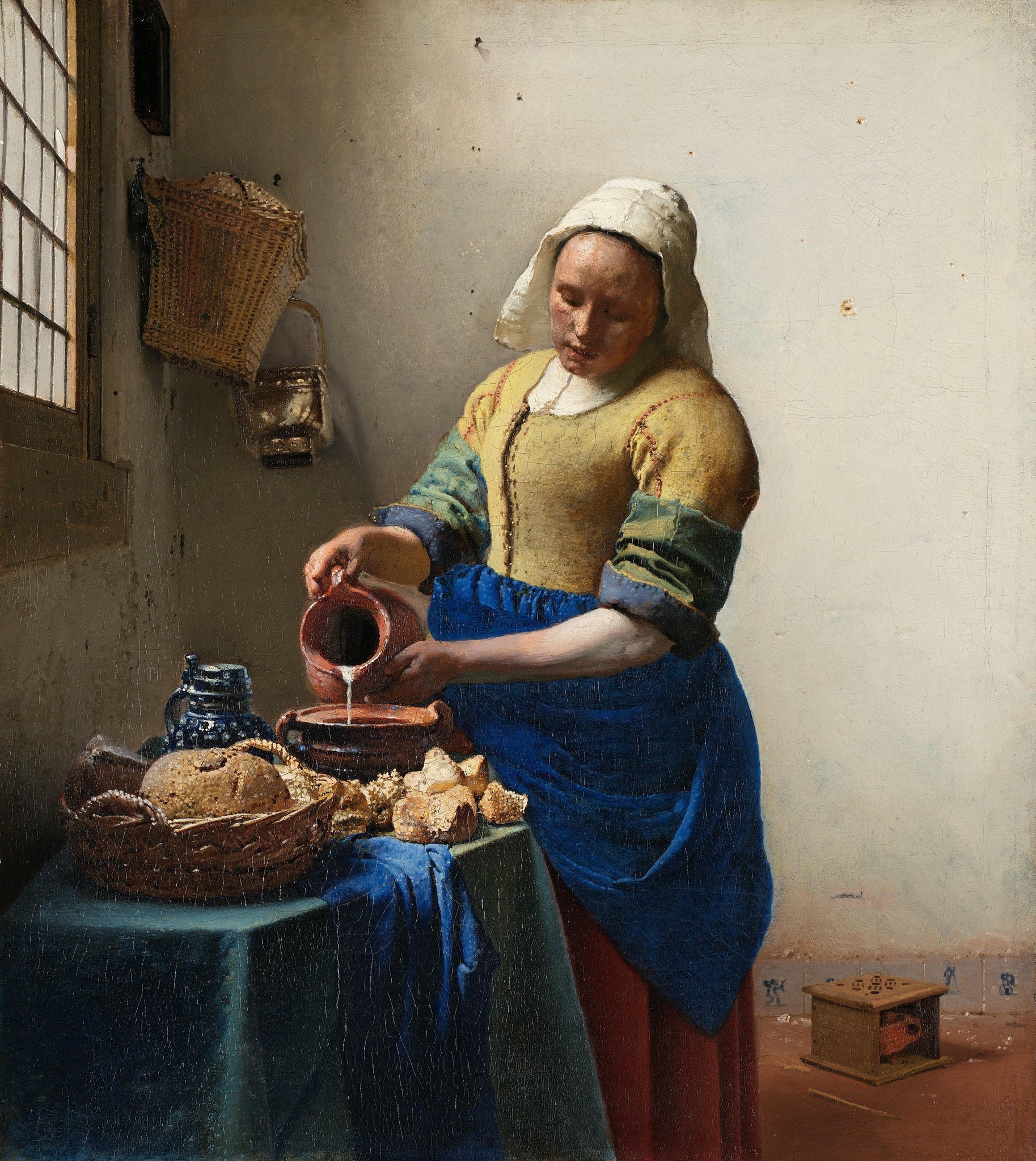
If that doesn’t tip you off to the direction this historic recreation is headed, allow us to note that the attendant, who’s far from the focus of this episode, is garbed so as to suggest The Milkmaid by a certain Dutch Baroque Period painter who specialized in domestic interior scenes…and whose initials are J.V.

The finishing touch is a turban of yellow silk taffeta and blue silk dupion, an exotic element that may produce a sense of deja vu in art lovers … and anyone who relishes a good art-based recreation challenge.

View more of Pauline Loven’s work and Getting Dressed In… episodes focused on other periods at Crow’s Eye Productions’ YouTube channel.

Related Content:

How Women Got Dressed in the 14th & 18th Centuries: Watch the Very Painstaking Process Get Cinematically Recreated

A Pre-Pantone Guide to Colors: Dutch Book From 1692 Documents Every Color Under the Sun

Ghosts of History: Dutch Artist Eerily Superimposes Modern Street Scenes on World War II Photos

Street Art for Book Lovers: Dutch Artists Paint Massive Bookcase Mural on the Side of a Building

Ayun Halliday is an author, theatermaker, and the Chief Primaologist of the East Village Inky zine. Her latest book, Creative, Not Famous: The Small Potato Manifesto, will be published in early 2022.  Follow her @AyunHalliday.

How Fashionable Dutch Women–Like the Girl with a Pearl Earring–Got Dressed in 1665 is a post from: Open Culture. Follow us on Facebook and Twitter, or get our Daily Email. And don't miss our big collections of Free Online Courses, Free Online Movies, Free eBooksFree Audio Books, Free Foreign Language Lessons, and MOOCs.


from Art Life Culture https://ift.tt/3HmrTvi
via IFTTT

5 Images for Winter

Snow covered fields. Icy lakes. Frozen windows. Drawn from the Aesthetica archives, these five artists create works full of intrigue and atmosphere – evoking winter’s chill across urban and remote landscapes.

Alessio Albi

Alessio Albi (b. 1986) uses framing devices – such as frosted car windows – to create cinematic compositions. This image is melancholy and intriguing, depicting one of Albi’s characters peering through icy glass. Delicate snowflakes fragment and splinter; the cold is palpable. It presents an atmosphere reminiscent of crime dramas: muted, foreboding, eerie. It begs the question: what will we find inside?

Uwe Langmann

Winter is a photographic series by German artist Uwe Langmann (b. 1985) that depicts sweeping topographies blanketed by clean, white expanses of snow. Langmann masterfully captures the land as it is submerged by the supremacy of nature. Sheds, trees, fences and poles protrude from the clean lines of the ground. The images invite viewers to marvel at simplicity, taking a moment to pause.

Kevin Cooley

Kevin Cooley’s (b. 1975) At Light’s Edge provides views of snow-covered American landscapes illuminated by eerie distress signals – messages coming from above. Bright yellow lightning flares shoot through the sky. The project was shot in Idaho, Montana and Wyoming – some of the least populated regions in the country – states selected for their scenic qualities and historical significance.

Joël Tettamanti

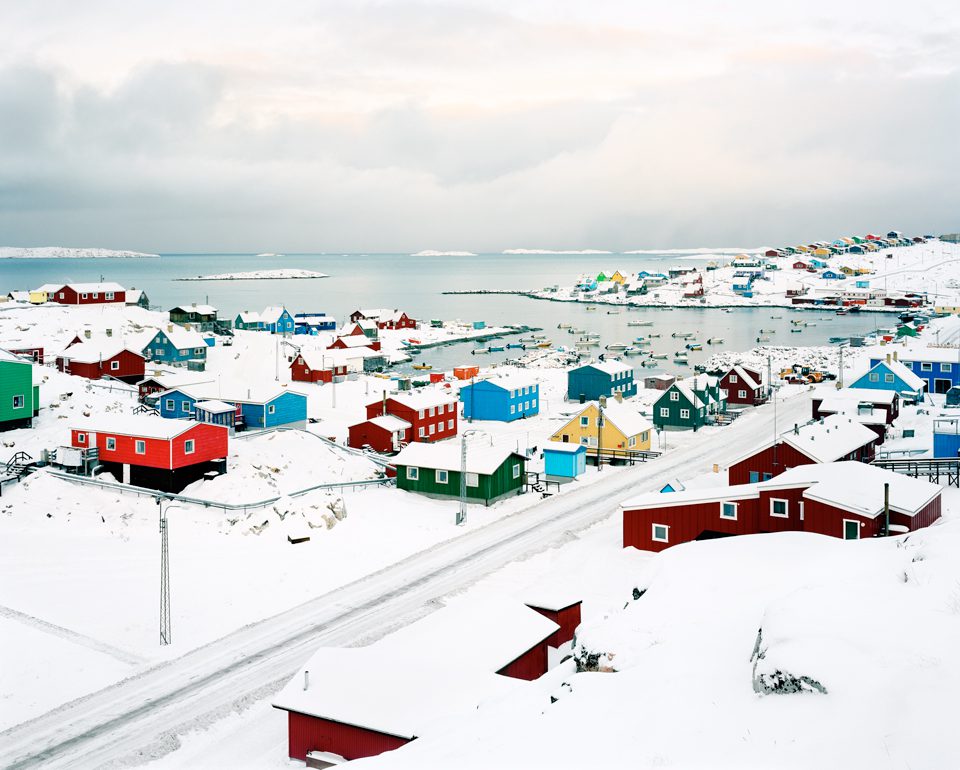
In the midst of a white snowscape, Joël Tettamanti (b. 1977) finds moments of captivating colour. While travelling across Greenland, he discovered objects and buildings which had managed to escape the thick layers of snow engulfing the region. The primary coloured houses associated with the Northern Hemisphere stand out against the washed-out streets, half-disguised in frosty weather.

Evgenia Arbugaeva

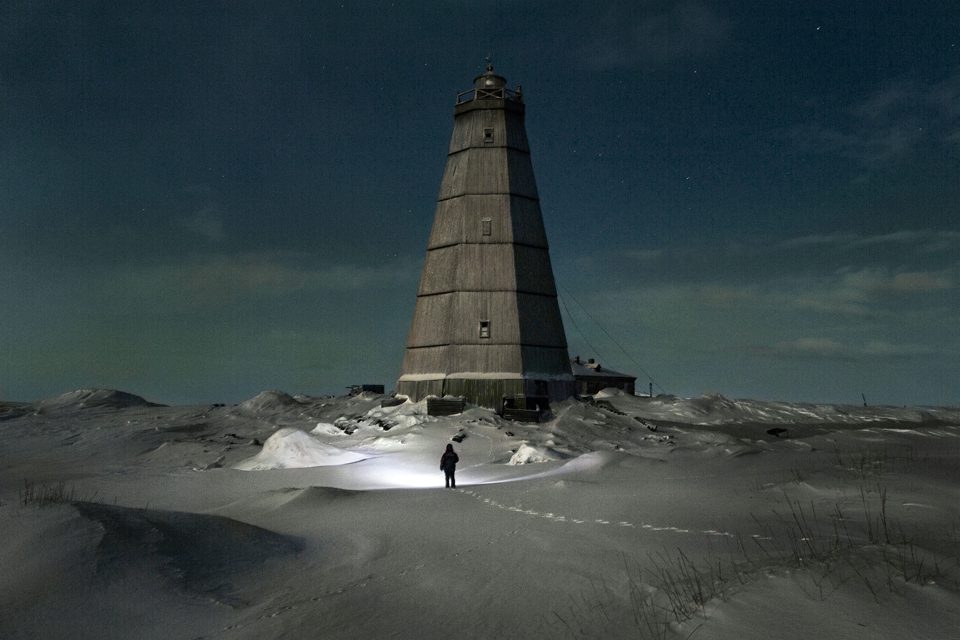
Siberia-born Evgenia Arbugaeva (b. 1985) explores the Arctic landscapes of her childhood in Weather Man. The series evolved from a chance meeting with Vyacheslav Korotki, a meteorologist living in Khodovarikha – a remote outpost. Arbugaeva aims to distil moments of magic in the scenes she records. The sequence captures the austere Arctic, illuminated by the shimmering aurora borealis.

The post 5 Images for Winter appeared first on Aesthetica Magazine.


from Art Life Culture https://ift.tt/32IAppn
via IFTTT

Thursday, December 30, 2021

Creativity Under Constraint

Emerging from lockdown, many of us might find that our memories are hazy, the events of the last 20 months blending together as we moved from one room to the next, and back again. For many of us, 2020 is a year that’s hard to remember at all. Beyond human reception to trauma, there’s a tangible reason for this blurring as our brains stop taking notes of our surroundings. As British economist Tim Harford notes: “Our brains seem to record a new place with a particular vividness. Even when a moment has nothing to do with place and everything to do with intellectual or emotional novelty, place still registers. A month of repeating the same routine might seem endless, but will be barely a blip in the memory: the ‘diffs’ are not significant enough for the brain to bother with.” (Financial Times, August 2020).

Despite this sense of stagnation, creativity thrives in constraints. California Museum of Photography celebrates this notion with an online exhibition, Art in the Plague Year. In this expansive show, subtitled There is Another World, But it is in this One, 55 photographers explore how the future leaks into the present – how we can use art to find new pathways beyond the physical. Douglas McCulloh, Senior Curator, notes: “What will emerge from a year of tumultuous events? How do we cross into a new future? 2020 was a year of beauty, pain and strangeness. Coronavirus laid bare societal inequities, racial rifts and economic injustices. Artists, meanwhile, did what they always do: respond, create, guide us into the future.” Art in the Plague Year is a testament to photography as a record, and also as an act of recovery.

artintheplagueyear.com

Ongoing | Online

Image Credits:
1. Bootsy Holler, Deadman Cove – 0811.1949 (2020), courtesy of the artist and Virginia Visual Arts, London https://ift.tt/32Pvhjr
2. Photo by Kate Warren

The post Creativity Under Constraint appeared first on Aesthetica Magazine.


from Art Life Culture https://ift.tt/3eAg6wX
via IFTTT

Wednesday, December 29, 2021

A Hare and an Inheritance, Once Hidden, at the Jewish Museum

Lovers of Edmund de Waal’s book can get close to that netsuke in a compelling show of objects that endured across a century of violence, discrimination and dispossession.

from Art Life Culture https://ift.tt/3qBTUIz
via IFTTT

Beverly Russell, Who Ran Design Magazines With Flair, Dies at 87

In the 1980s, she used her position as editor in chief of the trade magazine Interiors to advocate for women in media, design and architecture.

from Art Life Culture https://ift.tt/3qvFf1z
via IFTTT
As the Mayor Promised Millions for New Monuments, Old Ones Crumbled

Without dedicated funding for conservation, many of New York City’s public memorials and artworks are decaying from neglect.

from Art Life Culture https://ift.tt/3qvpVC5
via IFTTT

Four Smithsonian Museums Close Amid Omicron Staff Shortages

The museums, which are smaller ones, will be closed through Sunday as the Smithsonian routes staff to more-visited outposts.

from Art Life Culture https://ift.tt/3FDbHW3
via IFTTT
Remembering the Racist History of ‘Human Zoos’

In exhibitions that were popular until the early 20th century, living people of color were displayed for the enjoyment of white audiences. The bigotry behind those shows lives on.

from Art Life Culture https://ift.tt/3EEHRiG
via IFTTT
Tuesday, December 28, 2021

A Million-Pound Artwork, Once Slated for Demolition, Finds a New Home

The National Geographic Society announced that Elyn Zimmerman’s massive granite installation will be moved to the campus of American University.

from Art Life Culture https://ift.tt/3mHyXe9
via IFTTT

Coursera Offers $100 Off of Coursera Plus (Until January 13), Giving You Unlimited Access to Courses & Certificates

FYI: Between now and January 13 2022, Coursera is offering a $100 discount on its annual subscription plan called “Coursera Plus.” Normally priced at $399, Coursera Plus (now available for $299) gives you access to 90% of Coursera’s courses, Guided Projects, Specializations, and Professional Certificates, all of which are taught by top instructors from leading universities and companies (e.g. Yale, Duke, Google, Facebook, and more). The $299 annual fee–which translates to 81 cents per day–could be a good investment for anyone interested in learning new subjects and skills in 2022, or earning certificates that can be added to your resume. Just as Netflix’s streaming service gives you access to unlimited movies, Coursera Plus gives you access to unlimited courses and certificates. It’s basically an all-you-can-eat deal.

You can try out Coursera Plus for 14 days, and if it doesn’t work for you, you can get your money back. Explore the offer (before January 13, 2022) here.

Note: Open Culture has a partnership with Coursera. If readers enroll in certain Coursera courses and programs, it helps support Open Culture.

Coursera Offers $100 Off of Coursera Plus (Until January 13), Giving You Unlimited Access to Courses & Certificates is a post from: Open Culture. Follow us on Facebook and Twitter, or get our Daily Email. And don't miss our big collections of Free Online Courses, Free Online Movies, Free eBooksFree Audio Books, Free Foreign Language Lessons, and MOOCs.


from Art Life Culture https://ift.tt/3JpPrBd
via IFTTT
The Jagger Moving Company


:)

The Jagger Moving Company is a post from: Open Culture. Follow us on Facebook and Twitter, or get our Daily Email. And don't miss our big collections of Free Online Courses, Free Online Movies, Free eBooksFree Audio Books, Free Foreign Language Lessons, and MOOCs.


from Art Life Culture https://ift.tt/3pw1jtA
via IFTTT

The New York Public Library Opens Its Cabinet of Wonders

A Coco Chanel ballet slipper, Beethoven’s hair, Andy Warhol’s painted ticket. “Treasures,” at the New York Public Library, showcases delights from its collections.

from Art Life Culture https://ift.tt/3qzBJTX
via IFTTT

Shane MacGowan Wants a Lot More of Life

At 64, the famously surly former frontman of the Pogues has slowed down some, but his hunger for an artistic life is still insatiable.

from Art Life Culture https://ift.tt/32CswBQ
via IFTTT

Why Europe Has So Few Skyscrapers

Guy de Maupassant ate lunch at the restaurant in the base of the Eiffel Tower nearly every day, that being the only place in Paris where he wouldn’t have to look at the Eiffel Tower. 130 years later, the observation deck of the Tour Montparnasse is known to offer the most beautiful vista on the French capital — thanks precisely to the invisibility of the Tour Montparnasse. Spare a thought, if you will, for that highly conspicuous building, quite possibly the loneliest in Europe. Since its completion in 1973, it has stood as the sole skyscraper in Paris proper, its famous unsightliness having inspired a ban on the construction of buildings over seven stories high in the city center.

Paris isn’t alone in its lack of skyscrapers, a condition travelers from Asia and America notice in cities all over the Continent. In the video above, construction-themed Youtube channel The B1M explores the reasons for this relative paucity of tall towers in the capitals of Europe. “When skyscrapers first rose to prominence in the 19th century, first in Chicago and later in New York, many European cities were already firmly established with grand historic buildings and public spaces that left little room for large new structures,” says its narrator. At that time, a growing sense of cultural competition between America and Europe also meant that “each continent became wary of adopting the other’s concepts.”


Then came the Second World War, in the wake of whose devastation of Europe “an overwhelming desire to restore what had been destroyed took hold.” Few Continental cities held off the kind of demand for floor space that drove skyscraper construction in America. In the east, the Soviets built mostly “mid-rise, repetitive structures that sought to rehouse much of the population”; in the west, the restrictive phenomenon of “Brusselization” took hold in response to a wave of bulky postwar-modernist structures “that had little regard for architectural or cultural value.” This led to “a general dislike for modern buildings across Europe, with many seeing them as bland or soulless.”

No one who’s spent time in American city centers built up predominantly in the 1960s and 70s can dismiss those European detractors’ fears. But it would be a lie to claim that European cities have avoided skyscrapers entirely: even Paris has simply pushed them a few miles away, into unromantic business districts like La Défense. Ever-taller buildings have symbolized modernity for well over a century now, and no civilization can afford to keep modernity at too great a distance. Taking note of how attitudes toward skyscrapers have been “softening across the Continent” in the 21st century, this B1M video speculates on the possibility of a “skyscraper boom” in Europe. But even if that should happen, the Tour Montparnasse will surely continue standing alone.

Related Content:

A is for Architecture: 1960 Documentary on Why We Build, from the Ancient Greeks to Modern Times

Why Do People Hate Modern Architecture?: A Video Essay

The Creation & Restoration of Notre-Dame Cathedral, Animated

Watch the Building of the Empire State Building in Color: The Creation of the Iconic 1930s Skyscraper From Start to Finish

An Introduction to the Chrysler Building, New York’s Art Deco Masterpiece, by John Malkovich (1994)

Watch 50+ Documentaries on Famous Architects & Buildings: Bauhaus, Le Corbusier, Hadid & Many More

Based in Seoul, Colin Marshall writes and broadcasts on cities and culture. His projects include the book The Stateless City: a Walk through 21st-Century Los Angeles and the video series The City in Cinema. Follow him on Twitter at @colinmarshall or on Facebook.

Why Europe Has So Few Skyscrapers is a post from: Open Culture. Follow us on Facebook and Twitter, or get our Daily Email. And don't miss our big collections of Free Online Courses, Free Online Movies, Free eBooksFree Audio Books, Free Foreign Language Lessons, and MOOCs.


from Art Life Culture https://ift.tt/3pHsQIN
via IFTTT

The Omicron Variant Explained by Neil deGrasse Tyson & Regeneron President George Yancopoulos

What is the Omicron Variant? How do vaccines work? And what about monoclonal antibody therapy? On this episode of StarTalk, Neil deGrasse Tyson has a wide-ranging and quite informative conversation with George Yancopoulos, president of Regeneron, the company that created the monoclonal antibody therapy now being used in the fight against COVID-19. And there’s an interesting side note: During the 1970s, Tyson and Yancopoulos were high school classmates together at Bronx Science. They’ve both come a long way, and now they re-unite to explain the science behind the latest phase of the pandemic.

Would you like to support the mission of Open Culture? Please consider making a donation to our site. It’s hard to rely 100% on ads, and your contributions will help us continue providing the best free cultural and educational materials to learners everywhere.

Also consider following Open Culture on Facebook and Twitter and sharing intelligent media with your friends. Or sign up for our daily email and get a daily dose of Open Culture in your inbox. 

Related Content 

1,700 Free Online Courses from Top Universities.

Neil deGrasse Tyson Lists 8 (Free) Books Every Intelligent Person Should Read

MIT Presents a Free Course on the COVID-19 Pandemic

How the COVID-19 Vaccines Could Be Created So Quickly: Two Animated Videos Explain the How mRNA Vaccines Were Developed, and How They Work

The Omicron Variant Explained by Neil deGrasse Tyson & Regeneron President George Yancopoulos is a post from: Open Culture. Follow us on Facebook and Twitter, or get our Daily Email. And don't miss our big collections of Free Online Courses, Free Online Movies, Free eBooksFree Audio Books, Free Foreign Language Lessons, and MOOCs.


from Art Life Culture https://ift.tt/3qwTX8h
via IFTTT

Lighting up Space

A new exhibition from Light Art Space (LAS), a Berlin-based art foundation working at the threshold of art and technology, brings the minimalist spirit of North-American light artist Robert Irwin (b. 1928) to Kraftwerk Berlin, a gallery on the site of a former power station.

Still creatively active at 93, Irwin is one of the best-known artists associated with the Light and Space movement, which emerged from the borderlands of minimalism, geometric abstraction, op and land art in the 1960s. The philosophy of Light and Space spread from its base in Southern California to influence art worldwide, with James Turrell (b. 1943),  its best-known international proponent, and contemporary artists such as Olafur Eliasson (b. 1967) continuing to work with its legacy. Light and Space was engaged from the start with developments in aerospace technology in the scientific hub of the US West Coast, and utilised the most up-to-date theories and inventions in optics to create new forms of perceptual encounter.

Irwin’s work evolved from early experiments in abstract expressionism to pieces which drew on the hard-edged and minimalist trends of the 1960s, finally alighting on his characteristic site-specific approach by 1970. Leaving the studio behind, he began creating works which reinterpreted the gallery space itself, perceiving that the environmental conditions of the audience’s encounter with the installation must become a fundamental element of the artwork. Often these works were minimal and spare, initially suggesting that the room had been left bare, until subtle ocular and sensory effects took effect. As the artist puts it, “my ambition is, in a sense, to make you see a little bit more tomorrow than you saw today.”

For his new exhibition, simply titled Light and Space, Irwin has mounted frieze-like, abstract arrangements of fluorescent light-tubes along the walls of Kraftwerk Berlin. Hypnotic and allusive yet ultimately indecipherable, they work with the industrial grammar of the site architecture. This builds on Irwin’s belief that the artwork must emerge from the environment and structure in which it is placed. It’s the largest of Irwin’s commissions to date in Europe, and forms part of his ongoing Light and Space series.

Robert Irwin, Light and Space runs at Kraftwerk Berlin until 30 January. Find out more here.

Words: Greg Thomas

Image Credits:
1. Robert Irwin, Light and Space (Kraftwerk Berlin), 2021. Commissioned by LAS (Light Art Space) © Photo: Timo Ohler. VG Bild-Kunst, 2021
2. Robert Irwin, Light and Space (Kraftwerk Berlin) 2021. Commissioned by LAS (Light Art Space) © Photo: Timo Ohler. VG Bild-Kunst, 2021

The post Lighting up Space appeared first on Aesthetica Magazine.


from Art Life Culture https://ift.tt/3eA74jq
via IFTTT

Enjoy Classic Songs from A Charlie Brown Christmas, Performed by Vince Guaraldi Trio Drummer Jerry Granelli (RIP)

We’re living in times where so much is done to manipulate us. And things last for, what, a news cycle? A few minutes? This [album] is something that’s lasted 50 years. And not only lasted, but grown … I think there’s just a humanness. — Jerry Granelli 

As the Christmas season winds down, so too do marketing blitzes and consumerist frenzies that make it hard to see the holiday as anything but a year-end cash grab. But even the most cynical among us might admit to being moved each year by one Christmas classic, no matter our religious beliefs, capitalist sympathies, or lack thereof: that classic, of course, is The Charlie Brown Christmas Special. The talents of Charles Schulz, producer Lee Mendelson, and the Vince Guaraldi Trio combined to make a show not only bigger than its parts, but even more enduring, perhaps, than the juggernaut of Christmas commerce.

The choice of jazz for a primetime children’s Christmas special was inspired and edgy in 1965, though Guaraldi and his band weren’t originally booked for the holidays but for a never-completed documentary about Shultz that sparked the interest of corporate sponsor Coca-Cola. Mendelson realized the potential of the loose, breezy West Coast jazz of pianist Guaraldi, bassist Fred Marshall, and drummer Jerry Granelli for the newly-commissioned special, and the band imported much from their original music, improvising two new compositions and playing bluesy versions of “O Tannenbaum” and “Hark! The Herald Angels Sing.”


As Granelli remembers it, Coke execs weren’t pleased. “[A] little kid was going to come out and say what Christmas was all about, which wasn’t about shopping. And then the jazz music, which was improvised,” did not jive with the suits. Nonetheless the show aired, to the great delight of children and grown-ups everywhere for the past half century or so. Granelli himself feared pigeonholing and left the project with “some residual bad feelings over his paltry credit and royalties.” He later “spent decades avoiding any nostalgia trip to the land of Linus and Lucy,” Nate Chinen writes at WBGO. “But within the last decade” before his death in July 2021, “he leaned into Peanuts, recognizing the joy that Guaraldi’s soundtrack imparted, especially around the holidays.”

In the videos above, you can see Granelli play “Linus and Lucy” and “Skating” with his trio, with Chris Gestrin on Piano and Simon Fisk on bass, in 2014. Mentored by Dave Brubeck’s drummer, Joe Morello, Granelli toured the States in his early 20s, then joined the Vince Guaraldi Trio on returning to his home in the Bay Area. He “quickly found his footing, becoming an essential pat of the Guaraldi sound,” writes Chinen. Guaraldi’s original themes like “Linus and Lucy” and “Skating” “benefit immeasurably from Granelli’s whisper-soft brushwork.” The Trio went on to record with Brazilian bossa nova guitarist Bola Sete, and the drummer made his mark on the music world in other contexts, co-founding and teaching at the Creative Music Program of Naropa Institute (now Naropa University) in Boulder Colorado in the 1970s.

“Jazz is just a reflection of life,” Granelli told CBC Radio in 2020. “Life is improvised, life is uncertain. It’s not solid. It’s not permanent. The art I choose disappears after it’s played, it goes off into the ether. I love that.” That may be so, but Granelli’s contribution to the art of The Charlie Brown Christmas Special — music recorded in a 3-hour session when he was only 24 years old — has now outlasted him, the last member of the Vince Guaraldi Trio to pass away. May he skate on in peace, wherever he is now.

Related Content: 

How Innovative Jazz Pianist Vince Guaraldi Became the Composer of Beloved Charlie Brown Music

Peanuts Rock: Watch the Peanuts Gang Play Classic Rock Songs by Queen, Lynyrd Skynyrd, Journey & More

Umberto Eco Explains the Poetic Power of Charles Schulz’s Peanuts

Josh Jones is a writer and musician based in Durham, NC. Follow him at @jdmagness

Enjoy Classic Songs from <I>A Charlie Brown Christmas</I>, Performed by Vince Guaraldi Trio Drummer Jerry Granelli (RIP) is a post from: Open Culture. Follow us on Facebook and Twitter, or get our Daily Email. And don't miss our big collections of Free Online Courses, Free Online Movies, Free eBooksFree Audio Books, Free Foreign Language Lessons, and MOOCs.


from Art Life Culture https://ift.tt/32yT3Ad
via IFTTT

Monday, December 27, 2021

Donald H. Elliott, Innovative Urban Planner, Dies at 89

He preserved landmarks in New York through creative zoning, involved communities in decision-making and insisted on aesthetic standards for urban design.

from Art Life Culture https://ift.tt/3px7u0D
via IFTTT

A Deep Study of the Opening Scene of Quentin Tarantino’s Inglourious Basterds

Quentin Tarantino loves a cat-and-mouse scene, when forces of power and potential violence enter rooms, commandeer them, and play with their hapless victims. Think of Samuel L. Jackson’s Jules taking care of two hapless, out of their depth frat boy dope dealers—all the while helping himself to their Kahuna burger—in Pulp Fiction. Terrifying, hilarious, and electrifying: it has become one of his hallmarks. By the time of 2009’s Inglourious Basterds, he had perfected it so much that he devotes the film’s opening 20 minutes to one suspense-filled meeting between an unctuous Nazi and a French farmer, who is trying to hide a Jewish family under his floorboards.

Markus Madlangbayan (aka emotiondesigner) only has two film appreciation essays up on his Youtube site, and it’s a shame he didn’t do more. Here he takes us through Tarantino’s farmhouse scene, shot by shot, examining the director’s camera placement and composition, explaining his reasoning, and demonstrating why Quentin is a master of his craft.


Most directors use a standard form of coverage to shoot dialog scenes—a master shot of the two actors speaking, and then a close up of each actor with a tighter “punch in” shot of a face to emphasize drama. But Tarantino rarely does that, finding more interesting solutions to show the power dynamics in play. Farmer LaPadite at first has the upper hand, bluffing his way successfully through Hans Landa’s interrogation. That is, until he doesn’t. Tarantino will move his camera in an arc, breaking the 180 rule, and switching the positions of the characters on screen, even though they haven’t moved from their seats. The director has literally turned the table on LaPadite, just as Landa has done.

Tarantino is also very parsimonious with his close-ups. He gives LaPadite one as we see him steel himself for the approaching Nazis. He gives Landa one when all the social niceties are over, and instead he reveals he has known all along that they are sitting right above a hiding space. And finally, Tarantino gives LaPadite (and the actor that plays him, Denis Ménochet) a tight close-up as dread and impending death pass over his face.

Essayist emotiondesigner doesn’t do this, but this scene is asking for comparison with the aforementioned scene from Pulp Fiction. In 1994, Tarantino was hot and full of energy, but it’s actually a very conventionally shot scene, filled with close-ups and wides, but not without its wit. Fifteen years later, this short film-within-a-film opening shows how far the director had come.

Related Content:

Quentin Tarantino Explains How to Write & Direct Movies

Quentin Tarantino Reviews Movies: From Dunkirk and King of New York, to Soul Brothers of Kung Fu & More

Quentin Tarantino Gives a Tour of Video Archives, the Store Where He Worked Before Becoming a Filmmaker

Ted Mills is a freelance writer on the arts who currently hosts the Notes from the Shed podcast and is the producer of KCRW’s Curious Coast. You can also follow him on Twitter at @tedmills, and/or watch his films here.

A Deep Study of the Opening Scene of Quentin Tarantino’s <i>Inglourious Basterds</i> is a post from: Open Culture. Follow us on Facebook and Twitter, or get our Daily Email. And don't miss our big collections of Free Online Courses, Free Online Movies, Free eBooksFree Audio Books, Free Foreign Language Lessons, and MOOCs.


from Art Life Culture https://ift.tt/3qqmdJT
via IFTTT

Doreen Ketchens’ Astonishing Rendition of “The House of the Rising Sun”: A World-Class Clarinetist Busks on the Streets of New Orleans

Dirtiness has no description. It is a  feeling. — music transcriber George Collier

You may be able to read music and play the clarinet, but it’s extremely unlikely you — or anyone — will be able to play along with Doreen Ketchens‘ “dirty” solo on “The House of the Rising Sun,” above, despite an assist from Tom Pickles‘ scrolling transcription.

Download the transcription for free and keep trying.

It’s what Ketchens, a world renowned clarinetist and music educator, who has played for four US presidents and busks regularly in the French Quarter, would advise.

“You have to practice and be ready to perform at the drop of a hat” she told The Clarinet‘s Ben Redwine, when he asked if she had any advice for young musicians hoping to make it professionally.


She’s also a strong advocate of listening robustly, not throwing in the towel when someone else gets the job instead of you, and letting your personality come through in your playing:

You don’t want to sound like you’re playing an etude book. This is for all types of music – even classical. You want to move the audience, you want to touch them.

Trained as a classical clarinetist, Ketchens cozied up to jazz shortly after she cozied up to the tuba player who would become her husband. “All of the sudden, jazz wasn’t so bad,” she says:

I started to listen to jazz so I could learn the tunes and fit in with his band. I started listening to Louis Armstrong. He is my biggest influence. Some people call me Mrs. Satchmo, I guess because that concept is in my head. I’ll hear something he plays, which I’ve heard thousands of times, and I’ll think, “What? How did he do that?” Then, I listened to the clarinetists who played with him: Edmund HallBuster BaileyBarney Bigard. Those cats were awesome too! Edmund Hall had this thing he could do, where it sounds like he was playing two tones at the same time. People today might hum while they play to achieve something similar, but I don’t think that was what he was doing. Buster Bailey had a similar background to me, starting out with classical music, then learning jazz. Early on, I emulated Jerry Fuller, clarinetist with the Dukes of Dixieland. I would steal so many of his solos just so I could keep up with my husband’s band. Eventually, I realized what he was doing, and it translated into me being able to improvise. I’d start out transcribing solos, then playing by ear, copying what those clarinetists were doing. I don’t remember those solos now, but I’m sure that I still play snippets of them that creep into my improvisations.

However she got there, she possesses a singular ability to make her instrument growl and her command of 32nd notes makes us feel a little lightheaded.

Clarinetists abound in New Orleans, and they probably all cover “The House of the Rising Sun,” but you’ll be hard pressed to find a more exciting rendition than Ketchens’ on the corner of St. Peter and Royal, with husband Lawrence on tuba and daughter Dorian on drums.  Here’s the full versions, sans transcription.

You want an encore? Of course you do.

How about Ketchens’ magnificent solo on “Just a Closer Walk With Thee” for the Louisiana Philharmonic Orchestra?

Find more astonishing, transcribed solos and a heaping helping of Jacob Collier on George Collier’s (no relation) YouTube Channel.

His transcriptions, and those of collaborator Tom Pickles, are available for free download here, unless the artist sells their own transcription, in which case he encourages you to support the artist with your purchase.

If you’re a music nerd who would like to discuss transcriptions, give feedback on others’ attempts, and upload your own, join his community on Discord.

Related Content: 

Women of Jazz: Stream a Playlist of 91 Recordings by Great Female Jazz Musicians

Jazz Virtuoso Oscar Peterson Gives Dick Cavett a Dazzling Piano Lesson (1979)

Little Kid Merrily Grooves to ZZ Top While Waiting for the Bus

Ayun Halliday is an author, theatermaker, and the Chief Primaologist of the East Village Inky zine. Her latest book, Creative, Not Famous: The Small Potato Manifesto, will be published in early 2022.  Follow her @AyunHalliday.

Doreen Ketchens’ Astonishing Rendition of “The House of the Rising Sun”: A World-Class Clarinetist Busks on the Streets of New Orleans is a post from: Open Culture. Follow us on Facebook and Twitter, or get our Daily Email. And don't miss our big collections of Free Online Courses, Free Online Movies, Free eBooksFree Audio Books, Free Foreign Language Lessons, and MOOCs.


from Art Life Culture https://ift.tt/3psXuFA
via IFTTT

Is There Life After Death?: John Cleese and a Panel of Scientists Discuss That Eternal Question

“I am sixty-five years old,” said John Cleese as he began one year’s convocation address at my university, “which is nearly dead.” It got enough of a laugh that I’m not surprised to find, looking it up all these years later, that he seem to have deployed the line many times since. “I’m now incredibly old,” he said last year in a video urging compliance with coronavirus rules. “I’m nearly dead. I am 81 years of age.” Nevertheless, he remains decidedly non-dead (and indeed active on Twitter) today, though no doubt reality-based enough to accept that he’s no less mortal than his fellow Pythons Graham Chapman and Terry Jones, who’ve preceded him into the afterlife — if indeed there is an afterlife.

That very question animates the 80-minute conversation above. Put on by the University of Virginia’s Division of Perceptual Studies at the 2018 Tom Tom Festival, it places Cleese at the head of a panel of scientists charged with probing one question: is there life after death?


Many will find the evidence discussed here fairly persuasive, especially the documented “near-death experiences.” In these cases “we have heightened mental thoughts when your brain isn’t functioning; we have accurate perceptions from outside the body; we have meetings with deceased loved ones who you didn’t know had died; we have meetings with deceased loved ones whom you didn’t know, period; and we don’t have a good physical explanation for this.”

So says Bruce Greyson, Professor Emeritus of Psychiatry and Neurobehavioral Sciences at the University of Virginia, one of the panel’s five distinguished non-Pythons. The others are Jim B. Tucker, the Division of Perceptual Studies director; Edward Kelly, one of its Professors of Research; Emily Williams Kelly, one of its Assistant Professors of Research; and UVA Professor of Psychiatry and Neurobehavioral Sciences Kim Penberthy. Their work suggests to them that, while near-death experiences may not reflect the detachment of soul from body, neither do they seem to be straightforward hallucinations. The trouble with mounting a rigorous investigation into such a rare phenomenon is the necessarily small number of cases. These researchers might thus consider taking on Cleese himself as a subject; after all, the man’s self-professed state of near-death has lasted more than fifteen years now.

Related Content:

Is There an Afterlife? Christopher Hitchens Speculates in an Animated Video

Elie Wiesel (RIP) Talks About What Happens When We Die

Hear Kurt Vonnegut Visit the Afterlife & Interview Dead Historical Figures: Isaac Newton, Adolf Hitler, Eugene Debs & More (Audio, 1998)

Carl Sagan Answers the Ultimate Question: Is There a God? (1994)

John Cleese Plays the Devil, Makes a Special Appeal for Hell, 1966

Based in Seoul, Colin Marshall writes and broadcasts on cities and culture. His projects include the book The Stateless City: a Walk through 21st-Century Los Angeles and the video series The City in Cinema. Follow him on Twitter at @colinmarshall or on Facebook.

Is There Life After Death?: John Cleese and a Panel of Scientists Discuss That Eternal Question is a post from: Open Culture. Follow us on Facebook and Twitter, or get our Daily Email. And don't miss our big collections of Free Online Courses, Free Online Movies, Free eBooksFree Audio Books, Free Foreign Language Lessons, and MOOCs.


from Art Life Culture https://ift.tt/3mAdhAi
via IFTTT

10 from 2021: Top Digital Articles

What have you been reading this year? Aesthetica rounds up its most-read online articles of 2021. From emerging artists to the latest book reviews and international art fair coverage, this selection spans the breadth of image-making today. Discover surreal portraits, street photography, visual activism and more.

1 | Mirrored Environments | New Artists

“Often, mirrors are used to emphasise minute details but rarely used to look at the big picture,” says photographer Loreal Prystaj. “What if nature looked at itself? What would it see?” To create these images, Prystaj places herself in wild places – physically holding up mirrors to the environment. In doing so, she camouflages parts of the body. Heads and torsos are replaced with tree trunks, grasses and cloud-filled skies, creating the illusion of invisibility. Read the full feature »

2 | Matriarchal Utopia | Book Review

Along with being chased and flying, many people have bad dreams in which they find themselves inexplicably, often mortifyingly, naked in public. Not Carlota Guerrero (b.1989), the Barcelona-born artist who, this year, released her first monograph: Tengo Un Dragón Dentro del Corazón. If public nudity is meant to symbolise insecurity, shame or uncertainty in a dream, for Guerrero it’s become quite the opposite. For her, the nude woman is “a spiritual force. The one who accepts herself in her most natural condition is the most luminous, the strongest…” Read the full feature »

3 | PHotoESPAÑA 2021 | 5 to See

The 24th edition of Madrid’s PHotoESPAÑA festival followed a year of reckoning with the social effects of Covid-19. The curators were influenced by the cultural dynamics of the past 12 months, presenting a selection of work which explored the environment and sustainability alongside reflections on pan-African photography and women behind the lens. There was also a focus on the Madrid School, which transformed the medium in the mid-20th century. We previewed five must-see shows. Read the full feature »

4 | Art and Photography Now | Book Review

Can photography be art? It’s a question we don’t hear so much these days. The medium that struggled for years to earn its spot on the gallery wall now seems to have claimed that space. And every other space. “[Our] addiction to photography is so overpowering that it has become a reflex, an impulse so strong that it often replaces the desire to exist in the moment,” as author Charlotte Jansen writes in her latest book, Photography Now, which follows 2017’s Girl on Girl. “Photography is integrated into contemporary experience to such an extent that we consume the world through it.” Read the full feature »

5 | 10 to See: Pride Month 2021

Earlier this year, Aesthetica rounded up 10 must-see online shows, publications and videos for Pride Month. It features powerful and inspiring artwork from across the globe, much of which is still available to view online. Shown here is work by Sunil Gupta (b. 1953), who uses photography as a critical practice – focusing on family, race, migration and the political realities concerning the fight for international gay rights. Gupta has been inspirational to generations of activists and campaigners, from participating in New York’s active Gay Liberation Movement in the 1970s to recent campaigning in India. Read the full feature »

6 | Moments Distilled | New Artists

Light bounces across cool blue water. Moths hover above rippling pools. Watermelon slices balance on skin, and ice cold drinks fizz in the heat. Nick Prideaux is an Australian photographer based in Paris. His images distil moments of beauty from the everyday – from sun drenched scenery to legs tangled in sheets. “I approach photography in a mindful way and try to capture fleeting and fragmented scenes,” Prideaux explains. “I’m interested in exploring the intimate moments of my life; playing with light, colour and the people who I share this stage with.” Read the full feature »

7 | Questions of Being | New Artists

What does it mean to be human? This question is at the heart of works by 29-year-old Brazilian photographer Paulo Abreu. The following images probe how it feels to exist in today’s world. Bubbles rest on delicate skin, surrounded by nails. Butterflies burst from open voids. Bodies fold into cardboard frames. A runner is spliced in two, then three, then disappears into sand. The visual artist uses a mixture of techniques to create a unique, surreal universe. “Themes like loneliness, love delusions and anguish are very present,” Abreu says of the images. Read the full feature »

8 | In the Street I Exhibition Preview

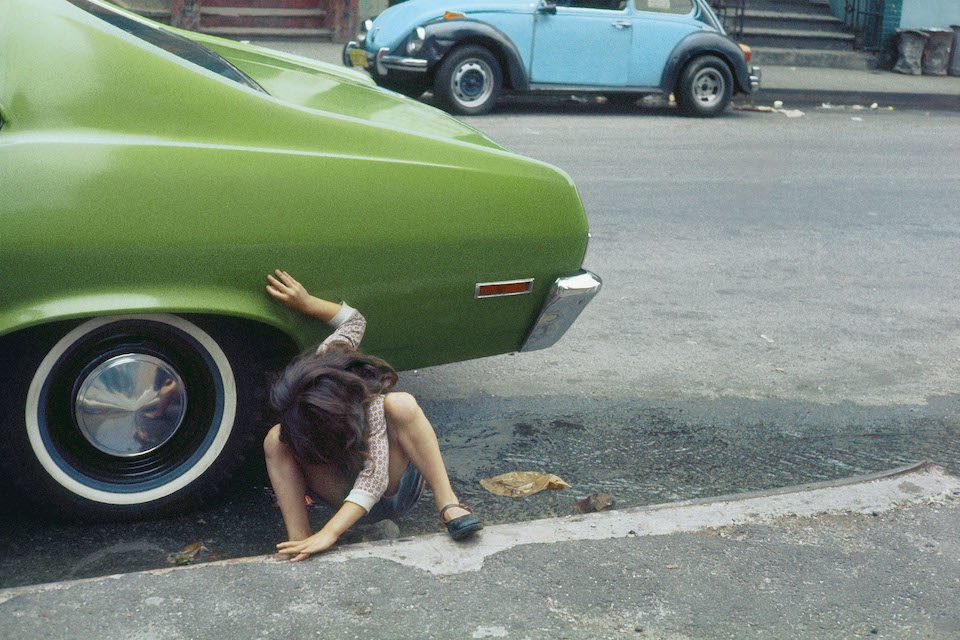
Helen Levitt (1913-2009) was a pioneer of spontaneous documentary photography, bringing the streets of her native New York to life across a career spanning eight decades. Ahead of a new retrospective at the Photographers’ Gallery in London, we looked back over a remarkable life and career. Levitt was as concerned with the poetry and mystery of street life as with the social realities underlying it, seeking out human subjects who seemed to be undertaking unusual activities. Read the full feature »

9 | New Queer Photography | Book Review

How can you sum up the sheer multiplicity of experiences, genders, sexualities, relationships and aesthetics of the contemporary global LGBTQIA+ community? The short answer is that you can’t. But in a new, sweeping 304-page photobook, Berlin-based art director and editor Benjamin Wolbergs makes some strong headway. Wolbergs, who spent four years working on the project, had the idea whilst designing a layout for art publisher Taschen. He was working with a set of images produced the 1950s with a gay audience in mind, and wondered what a similar book would look like today. Read full feature »

10 | 1-54: Photography to See

1-54 is a destination to discover contemporary art from Africa and the African diaspora. This year’s Paris edition took place online. The fair partnered with Christie’s, showcasing work by 70 artists from across Africa, Europe and North America. Discover Aesthetica‘s photography highlights, including Prince Gyasi (b. 1995), who describes his work as “therapy through colours.” Shooting on iPhone, Gyasi shows what can be achieved with with smartphone cameras. The images have a powerful impact. Read full feature »

The post 10 from 2021: Top Digital Articles appeared first on Aesthetica Magazine.


from Art Life Culture https://ift.tt/3eHNFgV
via IFTTT

Sunday, December 26, 2021

Wayne Thiebaud, Playful Painter of the Everyday, Dies at 101

Mr. Thiebaud’s rich and luminous depictions of midcentury Americana separated him from the classic Pop Art of the time.

from Art Life Culture https://ift.tt/3FA3uBV
via IFTTT

Is Disney the Met’s Fairy Godmother?

The Metropolitan Museum of Art hopes to entice visitors with a show of 150 Disney artifacts and its own objets d’art. But does getting cozy with a behemoth serve the public?

from Art Life Culture https://ift.tt/3z1Di0L
via IFTTT

Friday, December 24, 2021

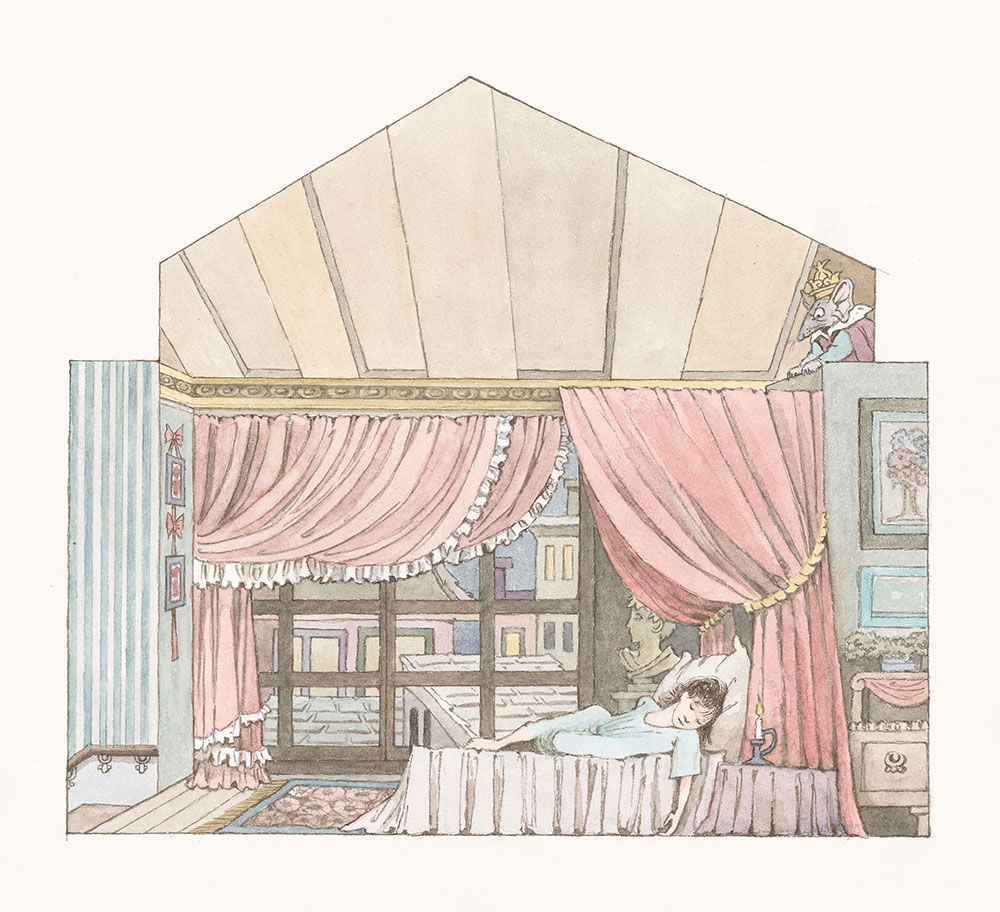
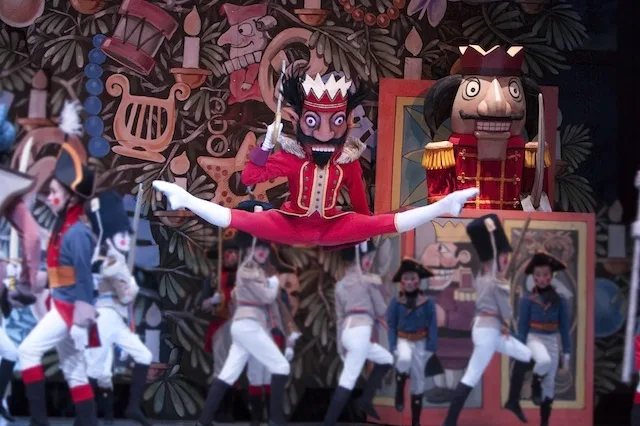
When Maurice Sendak Created a Dark Nutcracker Ballet

Children are the perfect audience for The Nutcracker. 

(Well, children and the grandmothers who can’t wait for the toddler to start sitting still long enough to make the holiday-themed ballet an annual tradition…)

Maurice Sendak, the celebrated children’s book author and illustrator, agreed, but found the standard George Balanchine-choreographed version so treacly as to be unworthy of children, dubbing it the “most bland and banal of ballets.”

The 1983 production he collaborated on with Pacific Northwest Ballet artistic directors Kent Stowell and Francia Russell did away with the notion that children should be “coddled and sweetened and sugarplummed and kept away from the dark aspects of life when there is no way of doing that.”


Tchaikovsky’s famous score remained in place, but Sendak and Stowell ducked the source material for, well, more source material. As per the New York City Ballet’s website, the Russian Imperial Ballet’s chief ballet master, Marius Petipa, commissioned Tchaikovsky to write music for an adaptation of Alexander Dumas’ child-friendly story The Nutcracker of Nuremberg. But The Nutcracker of Nuremberg was inspired by the much darker E.T.A. Hoffman tale, 1816’s “The Nutcracker and the Mouse King.”

The “weird, dark qualities” of the original were much more in keeping with Sendak’s self proclaimed “obsessive theme”: “Children surviving childhood.”

Sendak wanted the ballet to focus more intently on Clara, the young girl who receives the Nutcracker as a Christmas present in Act I:

It’s about her victory over her fear and her growing feelings for the prince… She is overwhelmed with growing up and has no knowledge of what this means. I think the ballet is all about a strong emotional sense of something happening to her, which is bewildering.


Balanchine must have felt differently. He benched Clara in Act II, letting the adult Sugarplum Fairy take centerstage, to guide the children through a passive tour of the Land of Sweets.

As Sendak scoffed to the Dallas Morning News:

It’s all very, very pretty and very, very beautiful… I always hated the Sugarplum Fairy. I always wanted to whack her.

“Like what kids really want is a candy kingdom. That shortchanges children’s feelings about life,” echoes Stowell, who revived the Sendak commission, featuring the illustrator’s sets and costumes every winter for 3 decades.

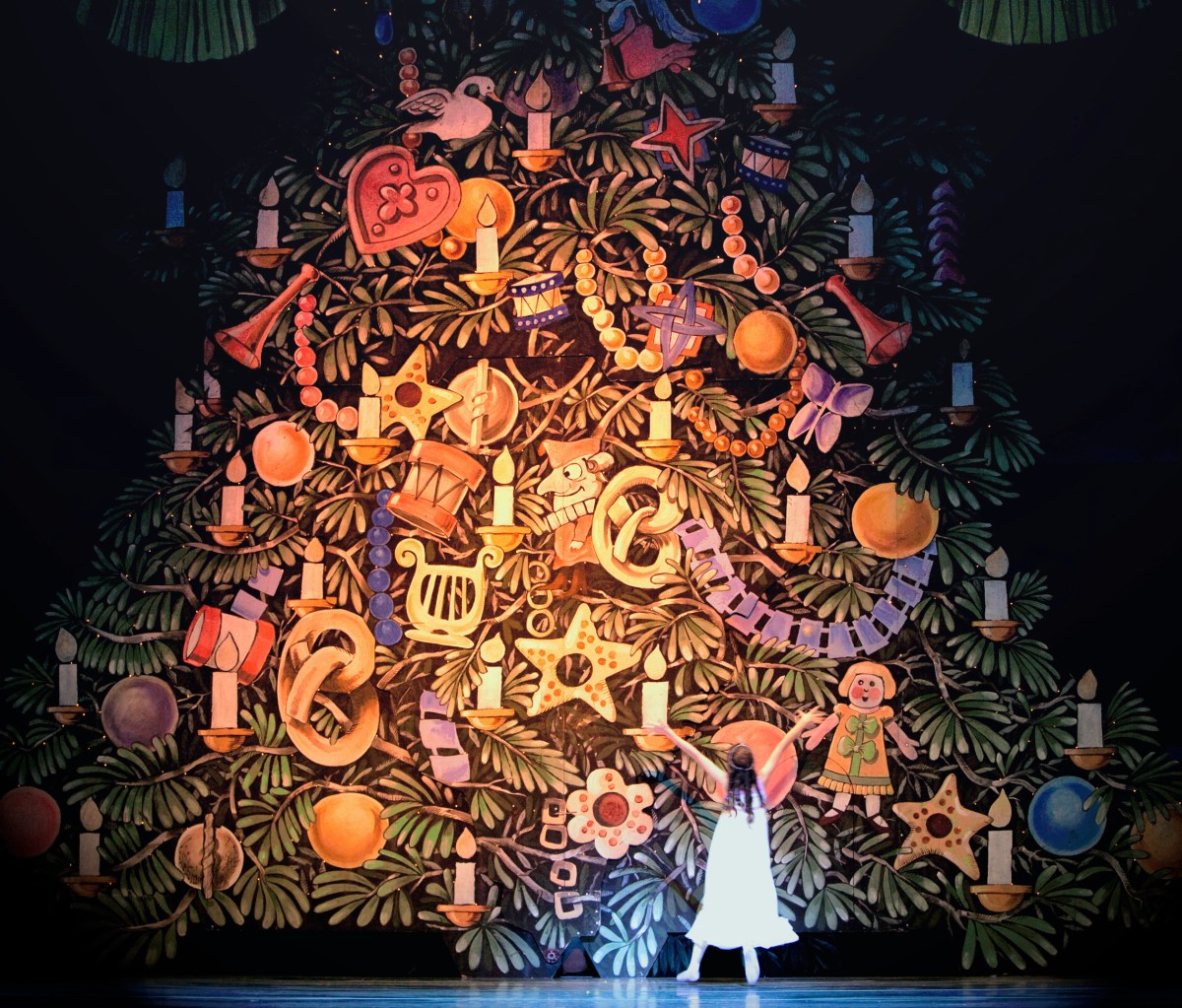
In lieu of the Sugar Plum Fairy, Sendak and Stowell introduced a dazzling caged peacock — a fan favorite played by the same dancer who plays Clara’s mother in Act I.

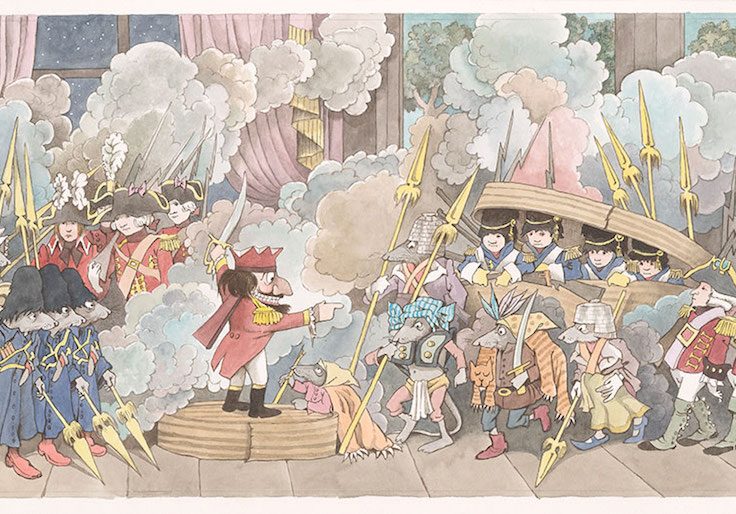
The threats, in the form of eccentric uncle Drosselmeier, a ferocious tiger, and a massive rat puppet with an impressive, pulsing tail, have a Freudian edge.

The painted backdrops, growing Christmas tree, and Nutcracker toy look as if they emerged from one of Sendak’s books. (He followed up the ballet by illustrating a new translation of the Hoffman original.)

The Sendak-designed costumes are more understated, thought Pacific Northwest Ballet costumer Mark Zappone, who described working with Sendak as “an incredible joy and pleasure” and recalled the funny ongoing battle with the Act II Moors costumes to Seattle Met:

Maurice’s design had the women in quite billowy pants. So we ripped them out of the box, threw them on the girls upstairs in the studios, and Kent started rehearsing the Moors. And one by one, the girls got their legs stuck in those pants and—boom—hit the floor, all six of them. It was like, “Oh my God, what are we going to do about that one?” They ended up, for years, twisting the legs in their costumes and making a little tuck here and there. It was a rite of passage; if you were going to do the Moors, don’t forget to twist your pants around so you won’t get stuck in them.

Rent a filmed version of Maurice Sendak’s The Nutcracker on Amazon Prime. (Look for a Wild Thing cameo in the boating scene with Clara and her Prince.)

Related Content: 

The Only Drawing from Maurice Sendak’s Short-Lived Attempt to Illustrate The Hobbit

Maurice Sendak Sent Beautifully Illustrated Letters to Fans — So Beautiful a Kid Ate One

Maurice Sendak Illustrates Tolstoy in 1963 (with a Little Help from His Editor)

Ayun Halliday is the Chief Primaologist of the East Village Inky zine and author, most recently, of Creative, Not Famous: The Small Potato Manifesto.  Follow her @AyunHalliday.

When Maurice Sendak Created a Dark <i> Nutcracker</i> Ballet is a post from: Open Culture. Follow us on Facebook and Twitter, or get our Daily Email. And don't miss our big collections of Free Online Courses, Free Online Movies, Free eBooksFree Audio Books, Free Foreign Language Lessons, and MOOCs.


from Art Life Culture https://ift.tt/32jpbbc
via IFTTT

A Painting of George Floyd Roils Catholic University

At the Catholic University of America in Washington, conservative students called for a campus ban on further displays of an artwork that depicts Floyd as Jesus.

from Art Life Culture https://ift.tt/3HdN56q
via IFTTT

Rodin Bronze From Family Plot Is Heading to Auction

Experts criticize the decision to remove this grave site memorial and sell it privately. The family says it’s a way to provide safekeeping.

from Art Life Culture https://ift.tt/3Jknr26
via IFTTT

Gillian Laub’s Divided House Is Still Standing. What About Yours?

“Family Matters” at the ICP captures the inevitability of families fractured over politics.

from Art Life Culture https://ift.tt/3qqQIzp
via IFTTT

Watch Bing Crosby’s Final Christmas Special, Featuring a Famous Duet with Bowie, and Bowie Introducing His New Song, “Heroes” (1977)

Bing Crosby died in October of 1977, but that didn’t stop him from appearing in living rooms all over America for Christmas. He’d already completed the shoot for his final CBS television special Bing Crosby’s Merrie Olde Christmas, along with such collaborators as Ron Moody, Stanley Baxter, the Trinity Boys Choir, Twiggy, and a young fellow by the name of David Bowie. Of course, Bowie had long since achieved his own dream of fame, at least to the younger generation; it was viewers who’d grown up listening to Crosby who needed an introduction. And they received a memorable one indeed, in the form of the Bowie-Crosby duet “Peace on Earth/Little Drummer Boy,” previously featured here on Open Culture.

This year you can watch Bing Crosby’s Merrie Olde Christmas in its hourlong entirety, which includes performances of “Have Yourself a Merry Little Christmas” and “Side by Side by Side” (from the late Stephen Sondheim’s Company), a (perhaps embellished) musical delineation of the extended Crosby family, and a session of literary reminiscence with none other than Charles Dickens.


The setup for all this is that Crosby, his wife, and children have all been brought to England by the invitation of the previously unknown Sir Percival Crosby, who desires to extend a hand to his “poor American relations” — and who happens to live next door to Bowie, that most English of all 1970s rock stars.

The search for Sir Crosby proceeds merrily, at one point prompting his famous relative to chat with Twiggy about the nature of love and loneliness, emotions “just as painful and just as beautiful as they ever were. Whether you’re a novelist, poet, or even a songwriter, it’s all in the way you sing.” These reflections lead into a stark music video for the title track of Bowie’s “‘Heroes'”, which had come out just weeks before (coincidentally, on the very day of Crosby’s death). Though a somewhat incongruous addition to such an old-fashioned production, it does vividly reflect a certain changing of the transatlantic pop-cultural guard.

In their scene together, Crosby and Bowie do exude an undeniable mutual respect, the younger man admitting even to have tried his hand at the older man’s signature holiday song, “White Christmas.” Having set off the 1940s Christmas-music boom by recording it 35 years before, Crosby sings it one last time himself to close out this special. Before doing so, he describes the Christmas season as “a time to look back with gratitude at being able to come this far, and a time to look ahead with hope and optimism.” Like all the elements of Bing Crosby’s Merrie Olde Christmas not involving David Bowie, these words were nothing new even then, but somehow they still manage to stoke our Christmas spirit all these decades later.

Related Content:

David Bowie & Bing Crosby Sing “The Little Drummer Boy/Peace on Earth” (1977)

David Bowie Sends a Christmas Greeting in the Voice of Elvis Presley

Johnny Cash’s Christmas Specials, Featuring June Carter, Steve Martin, Andy Kaufman & More (1976-79)

Revisit Kate Bush’s Peculiar Christmas Special, Featuring Peter Gabriel (1979)

Why “White Christmas,” “Here Comes Santa Claus,” “Let It Snow,” and Other Classic Christmas Songs Come from the 1940s

Based in Seoul, Colin Marshall writes and broadcasts on cities and culture. His projects include the book The Stateless City: a Walk through 21st-Century Los Angeles and the video series The City in Cinema. Follow him on Twitter at @colinmarshall or on Facebook.

Watch Bing Crosby’s Final Christmas Special, Featuring a Famous Duet with Bowie, and Bowie Introducing His New Song, “Heroes” (1977) is a post from: Open Culture. Follow us on Facebook and Twitter, or get our Daily Email. And don't miss our big collections of Free Online Courses, Free Online Movies, Free eBooksFree Audio Books, Free Foreign Language Lessons, and MOOCs.


from Art Life Culture https://ift.tt/3yTV1XC
via IFTTT

Watch Awesome Human Choreography That Reproduces the Murmurations of Starling Flocks

A number of choreographers have taken inspiration from the movement of birds.

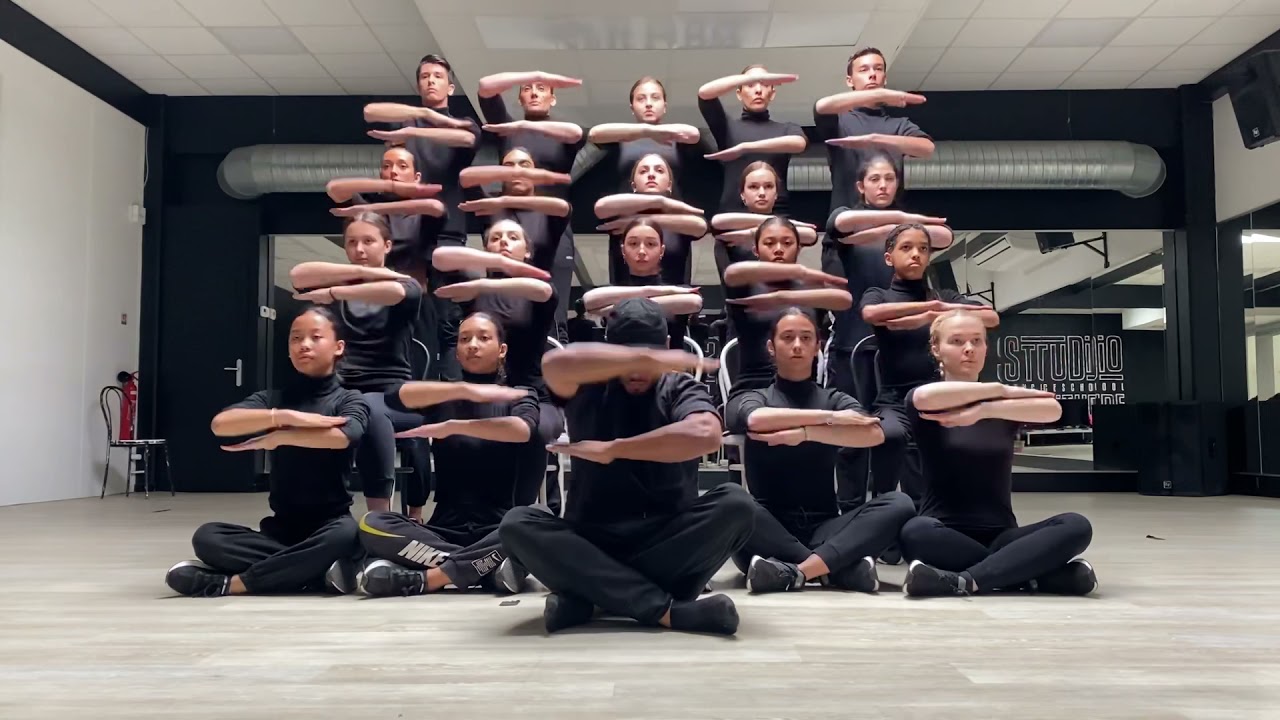
Sadek Waff, creator of thrillingly precise “murmurations” such as the one above, is also inspired by street dance — particularly the popping hip hop moves known as Tutting and ToyMan.

The nature lover and founder of the dance troupe Géométrie Variable uses both to excellent effect, channeling a starling flock’s hive mind with human dancers, whose lower halves remain firmly rooted. It’s all about the hands and arms, punctuated with the occasional neck flex.

As he observes on his Instagram profile:

There is magic everywhere, the key is knowing how to look and listen in silence. Like a cloud of birds forming waves in the sky, each individual has their own identity but also has an irreplaceable place in the whole.

To achieve these kaleidoscopic murmurations, Waff’s dancers drill for hours, counting aloud in unison, refining their gestures to the point where the individual is subsumed by the group.

The use of mirrors can heighten the illusion:

The reflection brings a symmetrical dimension, like a calm body of water contemplating the spectacle from another point of view, adding an additional dimension, an extension of the image.

The larger the group, the more dazzling the effect, though a video featuring a smaller than usual group of dancers — 20 in total — is helpful for isolating the components Waff brings to bear in his avian-inspired work.

We’re particularly enthralled by the murmuration Waff created for the 2020 Paralympic Games’ closing ceremony in Tokyo, using both professionals and amateurs in matching black COVID-precaution masks to embody the event’s themes of “harmonious cacophony” and “moving forward.” (Notice that the front row of dancers are wheelchair users.)

See more of Sadek Waff’s murmurations on his YouTube channel and on Instagram.

Related Content:

A Dancer Pays a Gravity-Defying Tribute to Claude Debussy

The Evolution of Dance from 1950 to 2019: A 7-Decade Joy Ride in 6 Minutes

The Iconic Dance Scene from Hellzapoppin’ Presented in Living Color with Artificial Intelligence (1941)

Ayun Halliday is the Chief Primaologist of the East Village Inky zine and author, most recently, of Creative, Not Famous: The Small Potato Manifesto.  Follow her @AyunHalliday.

Watch Awesome Human Choreography That Reproduces the Murmurations of Starling Flocks is a post from: Open Culture. Follow us on Facebook and Twitter, or get our Daily Email. And don't miss our big collections of Free Online Courses, Free Online Movies, Free eBooksFree Audio Books, Free Foreign Language Lessons, and MOOCs.


from Art Life Culture https://ift.tt/3ySWldv
via IFTTT

Making Strategic Decisions for Brand Narrative in a Rapidly Evolving Landscape

Deciding to innovate strategically, not blindly, empowers you to lead with confidence. ...