Tuesday, January 4, 2022

75 Post-Punk and Hardcore Concerts from the 1980s Have Been Digitized & Put Online: Fugazi, GWAR, Lemonheads, Dain Bramage (with Dave Grohl) & More

Between 1985 and 1988, a teenager by the name of Sohrab Habibion was attending punk and post-punk shows around the Washington, DC area. What set him apart was the bulky video camera he’d bring to the show and let roll, documenting entire gigs in all their low-rez, lo-fi glory. Just a kid trying to document a great night out. Habibion might not have known at the time what an important time capsule he was creating, but these 60 or so tapes have now been digitized and uploaded to YouTube, thanks to Roswell Films and the DC Public Library’s Punk Archive.

“Please keep in mind that I was a teenager when I shot these shows,” Habibion writes, “and had zero proficiency with the equipment. And, as you might imagine, nobody was doing anything with the lights or the sound to make things any better. What you get here is what was recorded on my Betamax and probably best appreciated with a bit of generosity as a viewer.”

Highlights include the above full concert by Fugazi on December 28, 1987, a year before their first e.p. and playing songs that would turn up on their 1990’s classic debut Repeater; Descendents in 1987 at the height of their career; The Lemonheads when they were a punk band and not a power pop group; the insane and hilarious GWAR from 1988, the year of their debut; and another hometown punk band, Dain Bramage, which featured Dave Grohl on drums, long before he played with Nirvana and the Foo Fighters (see below).

Habibion went on to his own musical career: first as the frontman for post-hardcore band Edsel, and currently as part of the band SAVAK.

Habibion’s tape archive makes one wonder: who else is out there sitting on a trove of historic recordings? And where is that person’s equivalent of the DC Library? Who would help fund such a project? And who would see the worth of such recordings? Not only are Habibion’s tapes about the bands themselves, but they tell a separate history of music venues come and gone, of a time and place that will never come again. Watch the shows here.

Related Content 

When John Belushi Booked the Punk Band Fear on SNL, And They Got Banned from the Show: A Short Documentary

Download 834 Radical Zines From a Revolutionary Online Archive: Globalization, Punk Music, the Industrial Prison Complex & More

Download 50+ Issues of Legendary West Coast Punk Music Zines from the 1970-80s: Damage, Slash & No Mag

Ted Mills is a freelance writer on the arts who currently hosts the Notes from the Shed podcast and is the producer of KCRW’s Curious Coast. You can also follow him on Twitter at @tedmills, and/or watch his films here.

75 Post-Punk and Hardcore Concerts from the 1980s Have Been Digitized & Put Online: Fugazi, GWAR, Lemonheads, Dain Bramage (with Dave Grohl) & More is a post from: Open Culture. Follow us on Facebook and Twitter, or get our Daily Email. And don't miss our big collections of Free Online Courses, Free Online Movies, Free eBooksFree Audio Books, Free Foreign Language Lessons, and MOOCs.


from Art Life Culture https://ift.tt/3JRDHrA
via IFTTT
To Boldly Explore the Jewish Roots of ‘Star Trek’

An exhibition at a Jewish cultural center has plenty of artifacts to delight Trekkies — but it also notes the Jewish origins of the Vulcan salute.

from Art Life Culture https://ift.tt/3ePyqlZ
via IFTTT

400,000+ Sound Recordings Made Before 1923 Have Entered the Public Domain

A century ago, the United States was deep into the Jazz Age. No writer is more closely associated with that heady era than F. Scott Fitzgerald, who (in addition to coining the verb to cocktail) took it upon himself to popularize its name. In 1922 he even titled a short story collection Tales from the Jazz Age, which entered the public domain not long ago. You may be more familiar with another work of Fitzgerald’s that followed Tales from the Jazz Age into freedom just last year: a novel called The Great Gatsby. But only this year have the actual sounds of the Jazz Age come into the public domain as well, thanks to the Music Modernization Act passed by U.S. Congress in 2018.

“According to the act, all sound recordings prior to 1923 will have their copyrights expire in the US on January 1, 2022,” says the Public Domain Review. This straightens out a tangled legal framework that previously wouldn’t have allowed the release of pre-1923 sound recordings until the distant year of 2067.

And so all of us now have free use of every sound recording from a more than 60-year period  that “comprises a rich and varied playlist: experimental first dabblings, vaudeville, Broadway hits, ragtime, and the beginnings of popular jazz. Included will be the works of Scott Joplin, Thomas Edison’s experiments, the emotive warblings of Adelina Patti and the first recording of Swing Low, Sweet Chariot.”

If you’d like to have a listen to all this, the Public Domain Review recommends starting with its own audio collection, a search for all pre-1923 recordings on Internet Archive, and two projects from the Library of Congress: the National Jukebox and the Citizen DJ project, the latter of which “has plans to do something special with the pre-1923 recordings once they enter the public domain.” You might also have a look at the Association for Recorded Sound Collections’ list of ten notable pre-1923 recordings, which highlights such proto-jazz records as “Crazy Blues” and “Dixieland Jass Band One-Step” (along with the wholly non-jazz work of Enrico Caruso and Pablo Casals).

According to Alexis Rossi at the Internet Archive Blog, the sound recordings just liberated by the Music Modernization act come to about 400,000 in total. Among them you’ll find “early jazz classics like ‘Don’t Care Blues’ by Mamie Smith and her Jazz Hounds, ‘Ory’s Creole Trombone’ by Kid Ory’s Sunshine Orchestra, and ‘Jazzin’ Babies Blues’ by Ethel Waters.” Rossi also highlights the novelty songs such as Billy Murray’s 1914 rendition of “Fido is a Hot Dog Now,” “which seems to be about a dog who is definitely going to hell.” The Jazz Age soon to come would exhibit a more raucous but also more refined sensibility: as Fitzgerald wrote in 1931, with the era he defined (and that defined him) already past, “It was an age of miracles, it was an age of art, it was an age of excess, and it was an age of satire.”

via Mefi

Related content:

Free: The Great Gatsby & Other Major Works by F. Scott Fitzgerald

What’s Entering the Public Domain in 2022: The Sun Also Rises, Winnie-the-Pooh, Buster Keaton Comedies & More

Hear the First Jazz Record, Which Launched the Jazz Age: “Livery Stable Blues” (1917)

The Cleanest Recordings of 1920s Louis Armstrong Songs You’ll Ever Hear

Great New Archive Lets You Hear the Sounds of New York City During the Roaring 20s

How the Internet Archive Has Digitized More than 250,000 78 R.P.M. Records: See the Painstaking Process Up-Close

Based in Seoul, Colin Marshall writes and broadcasts on cities and culture. His projects include the book The Stateless City: a Walk through 21st-Century Los Angeles and the video series The City in Cinema. Follow him on Twitter at @colinmarshall or on Facebook.

400,000+ Sound Recordings Made Before 1923 Have Entered the Public Domain is a post from: Open Culture. Follow us on Facebook and Twitter, or get our Daily Email. And don't miss our big collections of Free Online Courses, Free Online Movies, Free eBooksFree Audio Books, Free Foreign Language Lessons, and MOOCs.


from Art Life Culture https://ift.tt/3tbvyIH
via IFTTT

The Playful Everyday

ELLE, Harpers Bazaar and Tatler are just some of the publications which have featured Swiss-born photographer Lauretta Suter over the years. Based between London and Zurich, she works internationally for a broad variety of commercial and editorial clientele, recognised for her distinctive set designs.

Suter’s characters interact with these environments in playful and unexpected ways – standing on broken chairs, hiding behind cushions or diving into boxes of bubblewrap. These intriguing events take place against minimal backdrops, with walls painted in monochrome blues, purples and whites.

Suter’s compositions offer a fresh take on the everyday, with characters in pyjamas falling headfirst into multicoloured cereal bowls and assuming unconventional postures. Feathered trousers, patterned shirts and velvet suits provide layers of texture – visual counterpoints to otherwise crisp backgrounds.

laurettasuter.ch

@lauretta_suter

All images courtesy Lauretta Suter.
1. Publication: Offblack Magazine. Styling: Victoria Steiner.
2&3. Publication: Vision China. Stylist: Victoria Steiner.
4. Publication: Le Pibe. Stylist: Indigo Goss. Set design: Amy Friend. Model: Fay Parson
5. Publication: InStyle UK. Stylist: Arabella Greenhill. Set Design: George Lewin
6. Publication: Offblack Magazine. Styling: Victoria Steiner.
7. Publication: L’officiel Ukraine. Stylist: Indigo Goss. Set design: Joanna Goodman

The post The Playful Everyday appeared first on Aesthetica Magazine.


from Art Life Culture https://ift.tt/32Wyduv
via IFTTT

Monday, January 3, 2022

‘Three Minutes: A Lengthening’ Looks at Jewish Life Before Nazi Invasion

A documentary based on a home movie shot by an American in 1938 provides a look at the vibrancy of a Jewish community in Europe just before the Holocaust.

from Art Life Culture https://ift.tt/32Zo3sX
via IFTTT

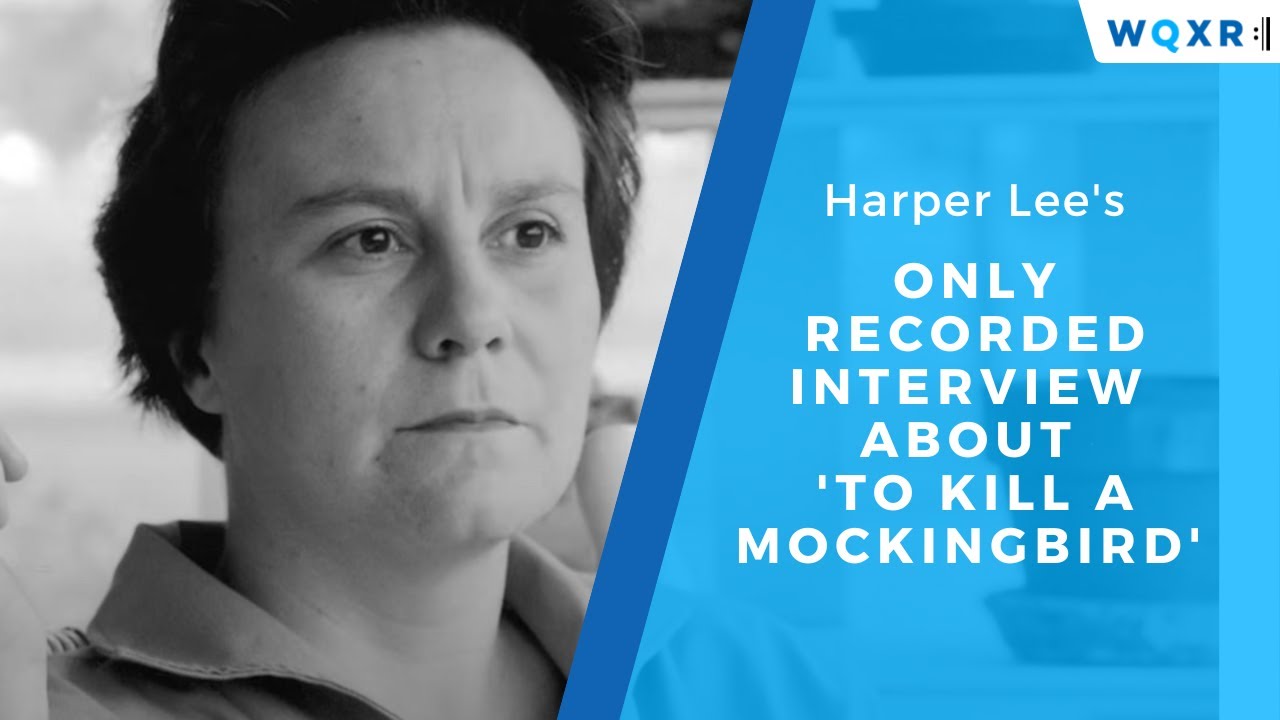
Harper Lee Gives Advice to Young Writers in One of Her Only Interviews Captured on Audio (1964)

You know the character Boo Radley? Well, if you know Boo, then you understand why I wouldn’t be doing an interview. Because I am really Boo. 

— Harper Lee, in a private conversation with Oprah Winfrey

Author Harper Lee loved writing but resisted interviews, granting just a handful in the fifty-six years that followed the publication of her Pulitzer Prize winning 1960 novel, To Kill a Mockingbird

Go Set a Watchman, her second, and final, novel began as an early draft of To Kill a Mockingbird, and was published in 2015, a year before her death.

Roy Newquist, interviewing Lee in 1964 for WQXR’s Counterpoint, above, probably expected the hotshot young novelist had many more books in her when he solicited her advice for “the talented youngster who wants to carve a career as a creative writer.”

Presumably Lee did too. “I hope to goodness that every novel I do gets better and better, not worse and worse,” she remarked toward the end of the interview.

She obliged Newquist by offering some advice, but stopped short of offering career tips to those eager for the lowdown on how to write an instant bestseller that will be adapted for stage and screen, earn a perennial spot in middle school curriculums, and — just last week — be crowned the Best Book of the Past 125 Years in a New York Times readers’ poll, beating out titles by well regarded, and vastly more prolific authors on the order of J.R.R. Tolkien, George Orwell, Gabriel García Márquez, and Toni Morrison.

“People who write for reward by way of recognition or monetary gain don’t know what they’re doing. They’re in the category of those who write; they are not writers,” she drawled.

Harper Lee’s Advice to Young Writers

  • Hope for the best and expect nothing in terms of recognition
  • Write to please an audience of one: yourself
  • Write to exorcise your divine discontent
  • Gather material from the world around you, then turn inward and reflect
  • Don’t major in writing

Listening to the recording, it occurs to us that this interview contains some more advice for young writers, or rather, those bringing up children in the digital age.

When Newquist wonders why it is that “such a disproportionate share of our sensitive and enduring fiction springs from writers born and reared in the South,” Lee, a native of Monroeville, Alabama, makes a strong case for cultivating an environment wherein children have no choice but to make their own fun:

I think … the absence of things to do and see and places to go means a great deal to our own private communication. We can’t go to see a play; we can’t go to see a big league baseball game when we want to. We entertain ourselves.

This was my childhood: If I went to a film once a month it was pretty good for me, and for all children like me. We had to use our own devices in our play, for our entertainment. We didn’t have much money. Nobody had any money. We didn’t have toys, nothing was done for us, so the result was that we lived in our imagination most of the time. We devised things; we were readers, and we would transfer everything we had seen on the printed page to the backyard in the form of high drama.

Did you never play Tarzan when you were a child? Did you never tramp through the jungle or refight the battle of Gettysburg in some form or fashion? We did. Did you never live in a tree house and find the whole world in the branches of a chinaberry tree? We did.

I think that kind of life naturally produces more writers than, say, an environment like 82nd Street in New York.

Hear that, parents and teachers of young writers?

  • Nurture the creative spirit by regularly prying the digital device’s from young writers’ hands (and minds.)

Bite your tongue if, thus deprived, they trot off to the theater, the multiplex, or the sports stadium. Remember that iPhones hadn’t been invented when Lee was stumping for the tonic effects of her chinaberry tree. These days, any unplugged real world experience will be to the good.

If the young writers complain — and they surely will — subject yourself to the same terms.

Call it solidarity, self-care, or a way of upholding your New Year’s resolution…

Read an account of another Harper Lee interview, during her one day visit to Chicago to promote the 1962 film of To Kill a Mockingbird and attend a literary tea in her honor, here.

Related Content: 

Harper Lee Gets a Request for a Photo; Offers Important Life Advice Instead (2006)

Harper Lee on the Joy of Reading Real Books: “Some Things Should Happen On Soft Pages, Not Cold Metal”

Writing Tips by Henry Miller, Elmore Leonard, Margaret Atwood, Neil Gaiman & George Orwell

Ayun Halliday is the Chief Primatologist of the East Village Inky zine and author, most recently, of Creative, Not Famous: The Small Potato Manifesto.  Follow her @AyunHalliday.

Harper Lee Gives Advice to Young Writers in One of Her Only Interviews Captured on Audio (1964) is a post from: Open Culture. Follow us on Facebook and Twitter, or get our Daily Email. And don't miss our big collections of Free Online Courses, Free Online Movies, Free eBooksFree Audio Books, Free Foreign Language Lessons, and MOOCs.


from Art Life Culture https://ift.tt/3ENqa0b
via IFTTT

Points of Departure

The ethics of representation have never been more important, or more closely scrutinised. Whose stories can we tell, how and why? Are we aware of the history that comes with the material? How can museums – and by extension, all public platforms, whether cultural, political or social – offer diverse and authentic projects? Galleries all over the world are now making widespread structural changes and institutional pledges, owing to the “asymmetries of power” that have governed over the years. Constellations: Photographs in Dialogue explores how additions to a collection “expand, deepen and complicate the stories a museum can tell.” Across six galleries, the exhibition creates moments of “dialogue, resonance and tension”, with four curators choosing brand new acquisitions as a point of departure. Featured names include Poklong Anading, Daisuke Yokota, Zanele Muholi and Imogen Cunningham, amongst others.

Wendy Red Star’s stand-out pieces challenge mainstream representations of Native American peoples, having photographed Crow culture on her own terms for many years. The Four Seasons series uses visual bathos to undermine the romantic idealisations of Native Americans being “one with nature.” Cardboard cut-out animals and Astroturf reference commercially produced prints from the 1970s. In a 2016 interview with Aperture, Star notes: “The USA was founded on the eradication of Native people. We were also, paradoxically, used for tourism to pro- mote the expansion of the west. For some reason, Native people are represented as eradicated. We are these mythical creatures.”

Constellations is at SFMOMA, San Francisco | Until 21 August

sfmoma.org

Image Credits:
1. Wendy Red Star, Spring, from the series Four Seasons, 2006, printed 2017; collection SFMOMA, gift of Loren G. Lipson, M.D.; © Wendy Red Star
2.Wendy Red Star, Fall, from the series Four Seasons, 2006, printed 2017; collection SFMOMA, gift of Loren G. Lipson, M.D.; © Wendy Red Star

The post Points of Departure appeared first on Aesthetica Magazine.


from Art Life Culture https://ift.tt/3HwmBgU
via IFTTT

Coursera Offers $100 Off of Coursera Plus (Until January 13), Giving You Unlimited Access to Courses & Certificates

A new deal to start a new year: Between now and January 13 2022, Coursera is offering a $100 discount on its annual subscription plan called “Coursera Plus.” Normally priced at $399, Coursera Plus (now available for $299) gives you access to 90% of Coursera’s courses, Guided Projects, Specializations, and Professional Certificates, all of which are taught by top instructors from leading universities and companies (e.g. Yale, Duke, Google, Facebook, and more). The $299 annual fee–which translates roughly to 81 cents per day–could be a good investment for anyone interested in learning new subjects and skills in 2022, or earning certificates that can be added to your resume. Just as Netflix’s streaming service gives you access to unlimited movies, Coursera Plus gives you access to unlimited courses and certificates. It’s basically an all-you-can-eat deal.

You can try out Coursera Plus for 14 days, and if it doesn’t work for you, you can get your money back. Explore the offer (before January 13, 2022) here.

Note: Open Culture has a partnership with Coursera. If readers enroll in certain Coursera courses and programs, it helps support Open Culture.

Related Content 

1,700 Free Online Courses from Top Universities.

Google & Coursera Launch Career Certificates That Prepare Students for Jobs in 6 Months: Data Analytics, Project Management and UX Design

Coursera Offers $100 Off of Coursera Plus (Until January 13), Giving You Unlimited Access to Courses & Certificates is a post from: Open Culture. Follow us on Facebook and Twitter, or get our Daily Email. And don't miss our big collections of Free Online Courses, Free Online Movies, Free eBooksFree Audio Books, Free Foreign Language Lessons, and MOOCs.


from Art Life Culture https://ift.tt/3sODwqQ
via IFTTT

Sunday, January 2, 2022

Boldface Names Give Los Angeles a New Cultural Center

An OMA-designed pavilion at the Wilshire Boulevard Temple was helped along by Eli Broad. It houses Wallis Annenberg’s GenSpace, a center for older people.

from Art Life Culture https://ift.tt/3ERzOil
via IFTTT

Saturday, January 1, 2022

12 Things Our Critics Are Looking Forward to in 2022

‘Better Call Saul’ returns, Cecily Strong stars in a one-woman show, and Faith Ringgold gets an overdue retrospective.

from Art Life Culture https://ift.tt/3zg30yy
via IFTTT

Making Strategic Decisions for Brand Narrative in a Rapidly Evolving Landscape

Deciding to innovate strategically, not blindly, empowers you to lead with confidence. ...